
Bottom-of-foot pain most often reflects mechanical strain of the plantar fascia, producing focal heel pain with first steps after rest. Diffuse burning or numbness suggests peripheral neuropathy, often bilateral and metabolic. Localized tenderness at the calcaneus may relate to a heel spur or bursitis. Overuse can cause tendonitis with activity-linked stiffness sports podiatrist. Home measures typically help, but persistent, severe, or neurologic symptoms need evaluation — further guidance on causes, self-checks, and treatments follows.
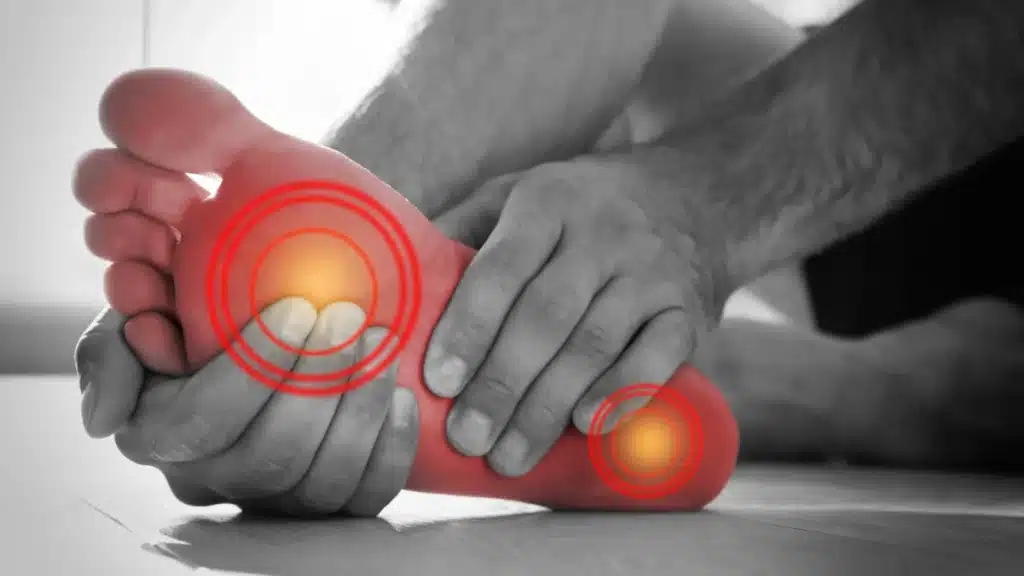
Common Causes of Bottom-of-Foot Pain (Plantar Fasciitis, Neuropathy, Heel Spurs, Bursitis, Tendonitis)
When pain is felt on the underside of the foot, several distinct pathologies are commonly responsible and can be differentiated by location, timing, and associated symptoms.
Plantar fasciitis involves focal heel pain from repetitive strain of the plantar fascia related to altered foot biomechanics.
Peripheral neuropathy produces diffuse burning or numbness People Podiatry, often bilateral, tied to metabolic or toxic causes rather than mechanical overload.
Heel spurs are bony projections that may coexist with fascia irritation but are seldom the sole pain generator.
Bursitis presents as localized, pressure-sensitive inflammation near tendon insertions.
Tendonitis reflects overuse of intrinsic or extrinsic foot tendons, causing activity-related pain and stiffness.
Nerve entrapment can mimic these conditions and should be considered when shooting pain or paresthesia occurs.
Clinical evaluation guides conservative management toward restored mobility and autonomy.
How to Tell Which Condition Is Causing Your Foot Pain (Symptom Clues & Self-Checks)
Distinguishing among plantar fasciitis, neuropathy, heel spurs, bursitis, tendonitis, and nerve entrapment relies on systematic attention to pain location, timing, quality, and precipitating factors.
Localized heel pain on first steps after rest suggests plantar fasciitis; diffuse burning or numbness that worsens at night or with prolonged standing points toward neuropathy.
Focal, sharp pain with pressure at the calcaneal tuberosity can indicate a heel spur, while lateral or medial sole tenderness with swelling favors bursitis or tendonitis.
Shooting, electric sensations triggered by specific movements imply nerve entrapment.
Simple self-checks—palpation, toe raises, and sensory testing—help differentiate causes. When uncertainty persists or mobility is limited, clinicians recommend gait analysis and pressure mapping to objectively assess loading patterns and guide targeted evaluation.
Simple At-Home Relief You Can Try Today (Rest, Stretching, Ice, Orthotics)
After using symptom clues and simple self-checks to narrow likely causes, a set of low-risk home measures can often reduce pain and improve function.
Rest and activity modification—reducing high-impact exercise, limiting prolonged standing, and alternating tasks—allow inflamed tissues to calm.
Targeted stretching of the plantar fascia, calf muscles, and Achilles tendon improves mobility and load distribution; perform gentle holds rather than forceful bounces.
Regular ice application (15–20 minutes, several times daily) decreases local inflammation.
Supportive insoles or temporary orthotics redistribute pressure and facilitate gradual return to activity.
Self-massage with approved massage tools and careful manual techniques can relieve tension; combine with safe topical remedies for short-term symptomatic control.
Progress should be conservative and guided by symptom response.
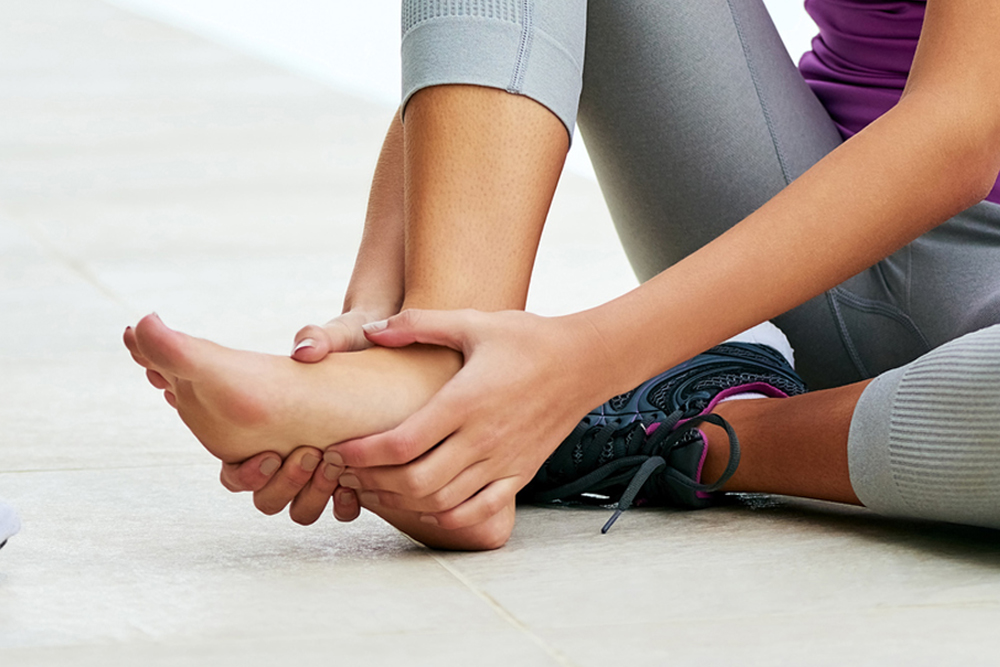
When to See a Doctor or Specialist for Plantar-Area Pain
If pain persists beyond a few weeks despite consistent home measures, or if symptoms worsen or limit daily function, medical evaluation is warranted to identify underlying causes and guide treatment.
Clinicians assess onset, location, severity, and impact on mobility; they perform focused examination and order imaging or nerve studies when indicated.
Red flags prompting earlier review include sudden severe pain, swelling, numbness, systemic symptoms, or inability to bear weight.
When to see a provider also depends on risk factors such as diabetes or peripheral vascular disease.
Primary care or podiatry can initiate care; a specialist referral (orthopedist, rheumatologist, neurologist, or vascular surgeon) is appropriate for refractory, complex, or diagnostically unclear cases.
Timely assessment preserves function and expands therapeutic options.
Preventing Future Pain: Footwear, Exercises, and Lifestyle Changes
Preventing recurrent plantar-area pain focuses on modifying external factors and strengthening intrinsic support to reduce strain on the foot. A program emphasizing appropriate footwear, regular shoe rotation, and targeted exercises can preserve mobility and independence.
Clinically chosen shoes with adequate cushioning and stable heel counters, combined with orthoses or removable arch supports, redistribute pressure and limit microtrauma. Daily routines should include calf stretching, plantar fascia mobilization, and intrinsic toe-strengthening to improve load tolerance.
Activity pacing, weight management, and gradual progression of training volume reduce recurrence risk. Regular reassessment of footwear and adherence to prescribed exercises maintain gains.
When symptoms persist despite conservative measures, timely professional evaluation guarantees options such as custom orthotics or adjunct therapies are considered.
Conclusion
Bottom-of-foot pain commonly reflects treatable conditions such as plantar fasciitis, neuropathy, heel spurs, bursitis, or tendonitis. Careful symptom appraisal and simple self-checks help narrow the cause, while conservative measures—rest, targeted stretching, ice, and supportive orthotics—often provide significant relief. Persisting, worsening, or mobility-limiting pain warrants professional evaluation to exclude serious pathology and guide interventions. With appropriate diagnosis, guided treatment, and preventive measures, most individuals achieve meaningful symptom reduction and restored function.