
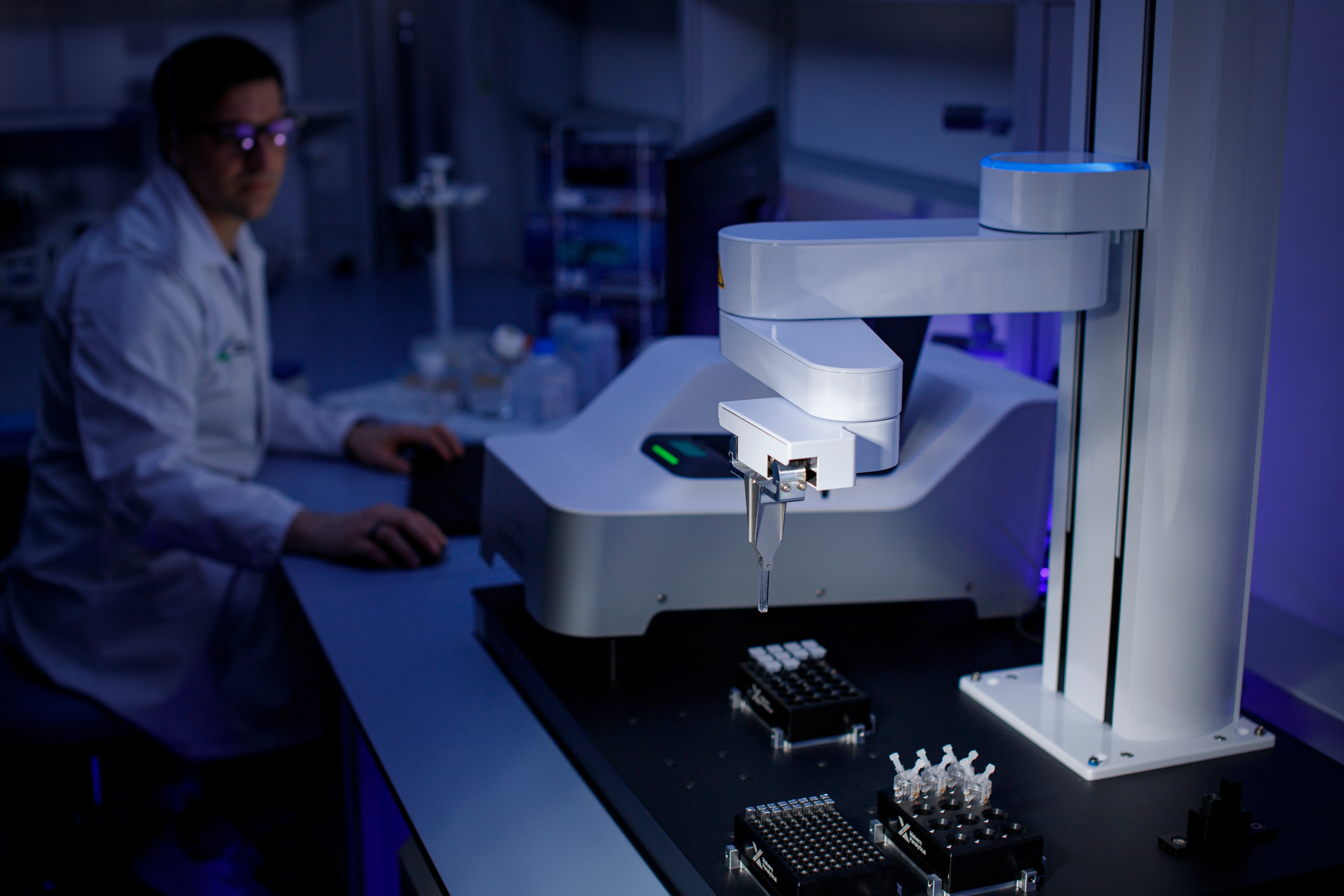
Discover the pivotal role of Zetasizer instruments in advancing scientific research and industrial applications. From precise particle size analysis to zeta potential measurements Zetasizer, these sophisticated tools facilitate critical studies in protein aggregation, stability assessment, and characterization of emulsions and suspensions.
Uncover the top applications of Zetasizer instruments that drive innovation and enhance product development across diverse fields, empowering researchers and industry professionals to make informed decisions based on accurate data and reliable measurements.
Key Takeaways
- Zetasizer instruments provide valuable insights for industries such as pharmaceuticals, nanotechnology, and food and beverage by facilitating particle size analysis and zeta potential measurements.
- They aid in analyzing protein aggregation Lab Alliance, stability, and aggregation propensity, helping in monitoring protein interactions and stability assessment of colloidal dispersions.
- Zeta potential analysis contributes to the characterization of emulsions and suspensions, providing insights into stability and quality of formulations.
- Zetasizer instruments find applications in various industries, enabling optimization of manufacturing processes, minimizing protein aggregation, and ensuring product quality.
Particle Size Analysis
When conducting particle size analysis using Zetasizer instruments, researchers and industry professionals can obtain precise and reliable data for a wide range of applications. The Zetasizer instruments utilize dynamic light scattering (DLS) technology to measure the size of particles in suspension, providing valuable insights for various fields such as pharmaceuticals, nanotechnology, and food and beverage.
By analyzing the distribution of particle sizes, scientists can optimize formulations, improve product quality, and enhance process efficiency. Additionally, the Zetasizer’s ability to measure zeta potential allows for the characterization of particle surface charge, crucial in understanding stability and interactions in colloidal systems.
Zeta Potential Measurements
Utilizing Zetasizer instruments, researchers and industry professionals can accurately measure zeta potential, providing essential insights into the surface charge of particles in suspension and enabling a deeper understanding of stability and interactions in colloidal systems.
Zeta potential measurements aid in assessing the electrostatic repulsion between particles, influencing dispersion and aggregation tendencies. This data is crucial in various fields such as pharmaceuticals, cosmetics, and food science, where maintaining product stability is paramount.

Protein Aggregation Studies
The measurement of zeta potential with the Zetasizer instruments provides valuable data for analyzing protein aggregation in research and industry settings. By assessing the surface charge of protein molecules, researchers can gain insights into the stability and aggregation propensity of proteins.
Zeta potential measurements enable the monitoring of protein interactions, aiding in the identification of conditions that promote or inhibit aggregation processes. This data is crucial for understanding the behavior of proteins in various formulations, such as pharmaceuticals, cosmetics, and food products.
Additionally, zeta potential analysis can help in optimizing manufacturing processes to minimize protein aggregation, ensuring product quality and efficacy. Overall, Zetasizer instruments play a vital role in advancing protein aggregation studies across different sectors.
Stability Assessment
How does zeta potential analysis contribute to the stability assessment of various formulations in research and industry?
Zeta potential, a key parameter measured by Zetasizer instruments, plays a crucial role in stability assessment. By analyzing the electric charge at the surface of particles or molecules in a solution, zeta potential provides insights into the stability of colloidal dispersions.
Formulations with higher zeta potential values typically exhibit increased electrostatic repulsion between particles, leading to enhanced stability against aggregation or flocculation. This information is invaluable in industries such as pharmaceuticals, cosmetics, and food science, where product stability is paramount.
Zetasizer instruments enable researchers and industry professionals to make informed decisions regarding formulation optimization and product development, ultimately ensuring product quality and performance.
Emulsion and Suspension Characterization
With a focus on emulsion and suspension characterization, zeta potential analysis continues to be instrumental in providing crucial insights into the stability and quality of various formulations in research and industry.
By measuring the zeta potential of emulsions and suspensions, researchers can assess the electrostatic forces between particles, which directly influence stability. Understanding these interactions helps in formulating products with desired properties, such as optimal dispersion and minimal aggregation.
Zetasizer instruments allow for precise measurement of particle size distribution in emulsions and suspensions, aiding in the development of products ranging from cosmetics to pharmaceuticals. Moreover, zeta potential analysis assists in monitoring changes in formulations over time, ensuring product quality and stability throughout its lifecycle.
Conclusion
In conclusion, zetasizer instruments play a crucial role in various applications in both research and industry. From particle size analysis and zeta potential measurements to protein aggregation studies and stability assessment, these instruments provide valuable data for understanding and optimizing various processes.
Emulsion and suspension characterization are also key areas where zetasizer instruments are used. Overall, the diverse applications of zetasizer instruments make them indispensable tools in scientific research and industrial settings.